The key points
- Choose the oven format alongside the kitchen layout.
- Check door access and a practical place for hot dishes.
- Compare complete installation costs and both cooking functions.
Choose where cooking should happen
A separate built-in oven and cooktop let you give each a different position. The oven may sit under a benchtop or at a considered height in a wall cabinet. This can create distinct work areas when one person manages the cooktop while another checks baking, provided the surrounding space supports that arrangement.
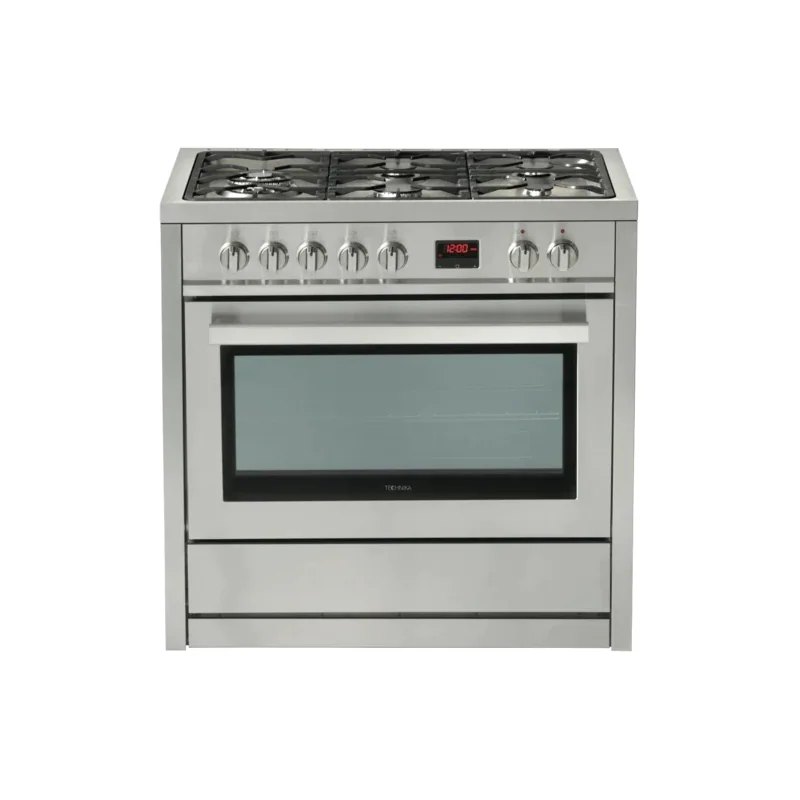
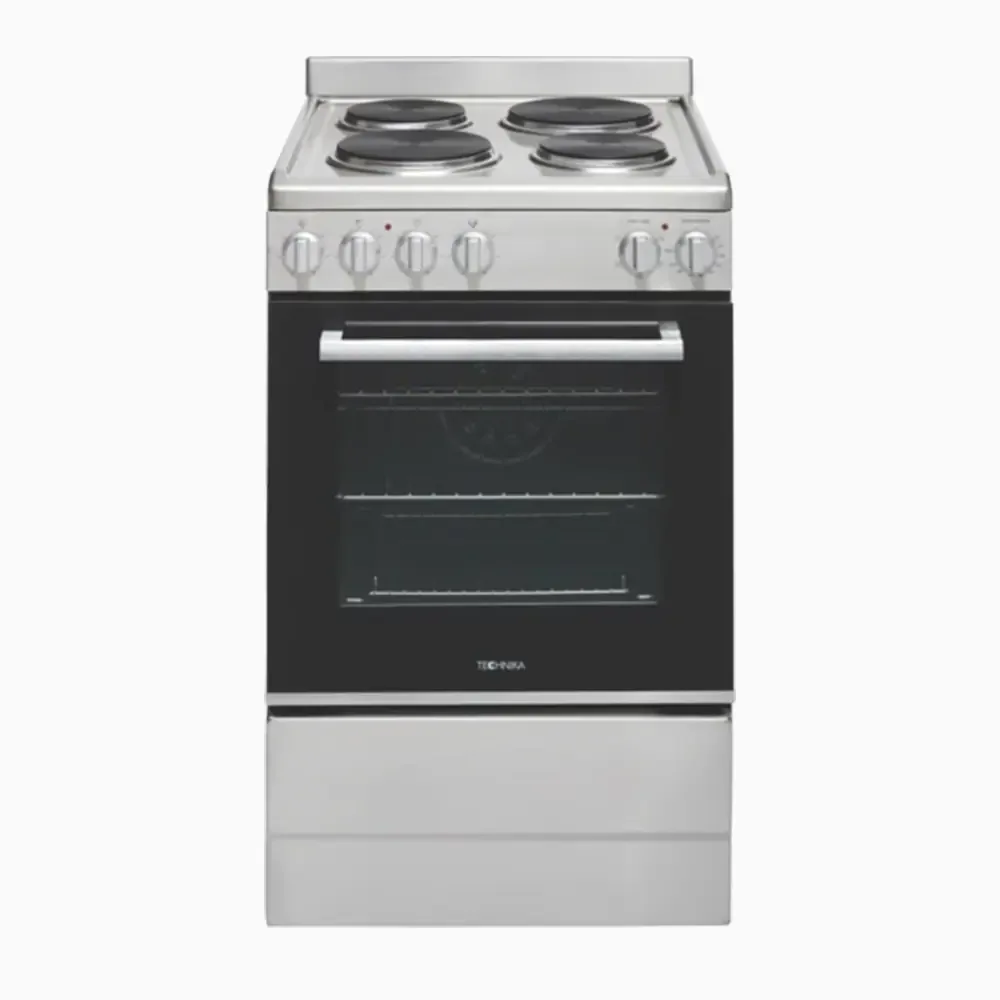
A freestanding cooker keeps both functions together. That can give a kitchen a clear cooking centre, with preparation and storage positioned alongside it. Consider the entire route from fridge to preparation space to cooker, rather than selecting a format from a photograph of an otherwise very different room.
Think through access with a hot dish
Imagine removing your heaviest roasting dish and setting it down. Check the door's open position, the reach into the cavity and the location of an appropriate landing surface. An oven mounted too high can be awkward just as a low oven can be, so choose a position that suits the people who actually cook.
Also consider the surrounding traffic. A door projecting into a narrow passage changes how comfortably the kitchen works during dinner. A built-in arrangement is not automatically more accessible, and a freestanding cooker is not automatically inconvenient. The useful comparison is between the actual proposed layouts, including cabinets, handles and nearby appliances.
Compare flexibility over the appliance's life
Separate appliances allow you to choose an oven and cooktop independently. You might prefer one width or heat source at the bench and a different oven format in the cabinetry. A cooker ties those choices together, so assess whether both halves suit your routine rather than accepting a cooktop layout just to get a preferred oven.
For a replacement, have the existing space and services assessed before assuming either format will be a simple swap. Built-in cabinets require suitable support, ventilation and clearances. Freestanding cookers also require correct securing and installation. Licensed electrical and gas trades should assess the relevant connections using the exact model instructions.
Price the complete layout
Include cabinet alterations, benchtop work, ventilation and installation in the budget. A lower appliance price can be outweighed by changes needed to make the format fit, while a renovation may give you flexibility worth considering. Ask for a written scope so you can compare two practical kitchen plans on the same basis.
When browsing Value House, compare the actual models, condition, included trays or supports and the warranty information stated for each listing. Manufacturer feature pages do not establish an individual unit's accessories or condition. Once the format and installation plan are confirmed, arrange pickup by appointment and coordinate delivery to the installation area.
Before you buy
- Sketch each proposed layout.
- Check reach and door movement.
- Have cabinetry and services assessed.
- Review the exact listing and accessories.
Sources & further reading
Prepared with AI assistance using the manufacturer and Australian guidance linked below. Check the exact model’s documentation when planning a purchase or installation.