The key points
- Judge door movement in the proposed kitchen layout.
- Confirm rail extension, supported accessories and included levels.
- Check rail compatibility and cleaning rules for the exact model.
Check the door in the whole room
A conventional drop-down door needs clear space in front of the oven and changes how far you reach into the cavity. Some models use a side-opening or retracting design. NEFF's Slide&Hide system, for example, allows the door to retract beneath the cavity. Each arrangement has its own movement and clearance requirements.
Think about nearby cabinet handles, a kitchen island and the route other people take through the room. A door that suits an open display area may feel different in a narrow galley. Check whether you can see and reach the shelves comfortably without standing in the main walkway or stretching around another open appliance.
Understand what the rails add
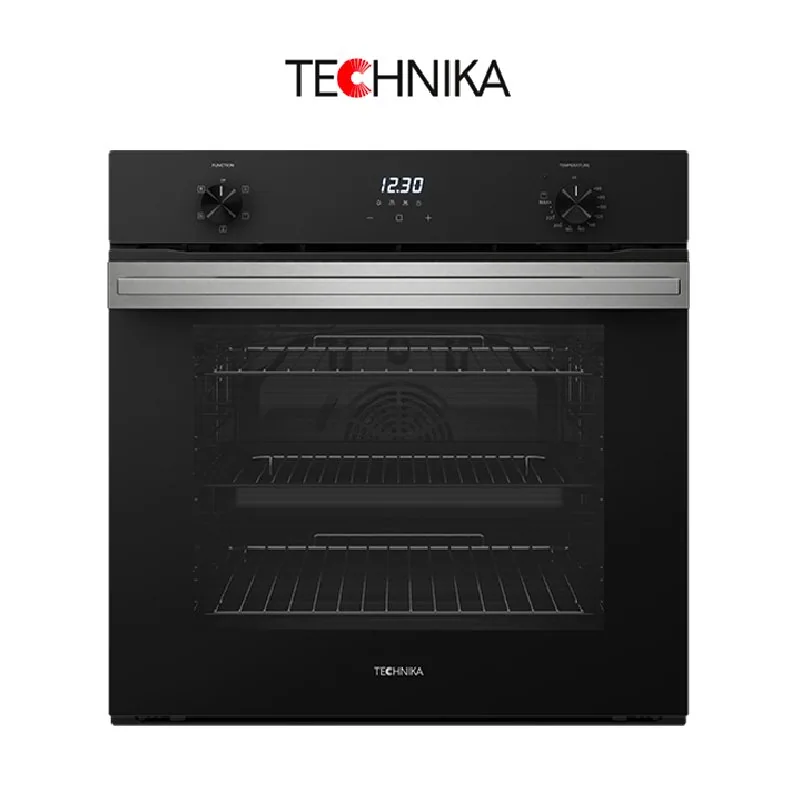
Telescopic rails support compatible shelves or trays as they are drawn outward. Designs vary in how far they extend and which shelf levels they can occupy. Check the exact rail system and the accessories it supports, rather than assuming all trays can be used with every runner or that every shelf position includes a runner.
A supported tray can make inspection and handling more manageable, but food, cookware and oven components remain hot. You still need appropriate oven gloves and a safe place to set dishes down. Consider the weight and shape of your usual roasting dish, including the liquid it may contain, when deciding whether the rail arrangement is useful.
Compare cleaning and accessory compatibility
Read the manufacturer's cleaning instructions for runners, side supports and the door. Some telescopic rails must be removed before pyrolytic cleaning, while specifically approved systems may have different rules. Bosch's accessory information distinguishes compatibility and pyrolysis suitability, illustrating why matching a part by appearance or width alone is unreliable.
If you expect to add rails later, check the appliance's full model identifier and the approved accessory reference before purchasing them. For removable door glass or doors, use only the model's instructions and obtain service help when needed. A feature being removable does not mean it should be dismantled casually during an inspection.
Assess the particular oven you are buying
During an agreed inspection, ask to see how the door opens and how included shelves or runners move while the oven is cold. Note missing supports, unexpected resistance or an unclear accessory fit, and ask for clarification. Avoid assuming a problem is normal or that a replacement part from another oven will resolve it.
For Value House stock, review the listing's condition and confirm exactly which shelves, rails and trays accompany the model. Warranty details depend on the individual listing. Have installation height and surrounding clearances assessed, then arrange pickup by appointment with a transport plan that protects the door, glass and accessories.
Before you buy
- Measure door movement and walkway space.
- Check access with your usual dish size in mind.
- Identify included rails and supports.
- Read accessory and pyrolytic-cleaning compatibility.
Sources & further reading
Prepared with AI assistance using the manufacturer and Australian guidance linked below. Check the exact model’s documentation when planning a purchase or installation.