The key points
- Useful pan spacing matters more than the headline burner count.
- Include low-heat cooking when comparing burner combinations.
- Check approved pan supports and gas compatibility for the exact model.
Plan a meal across the whole surface
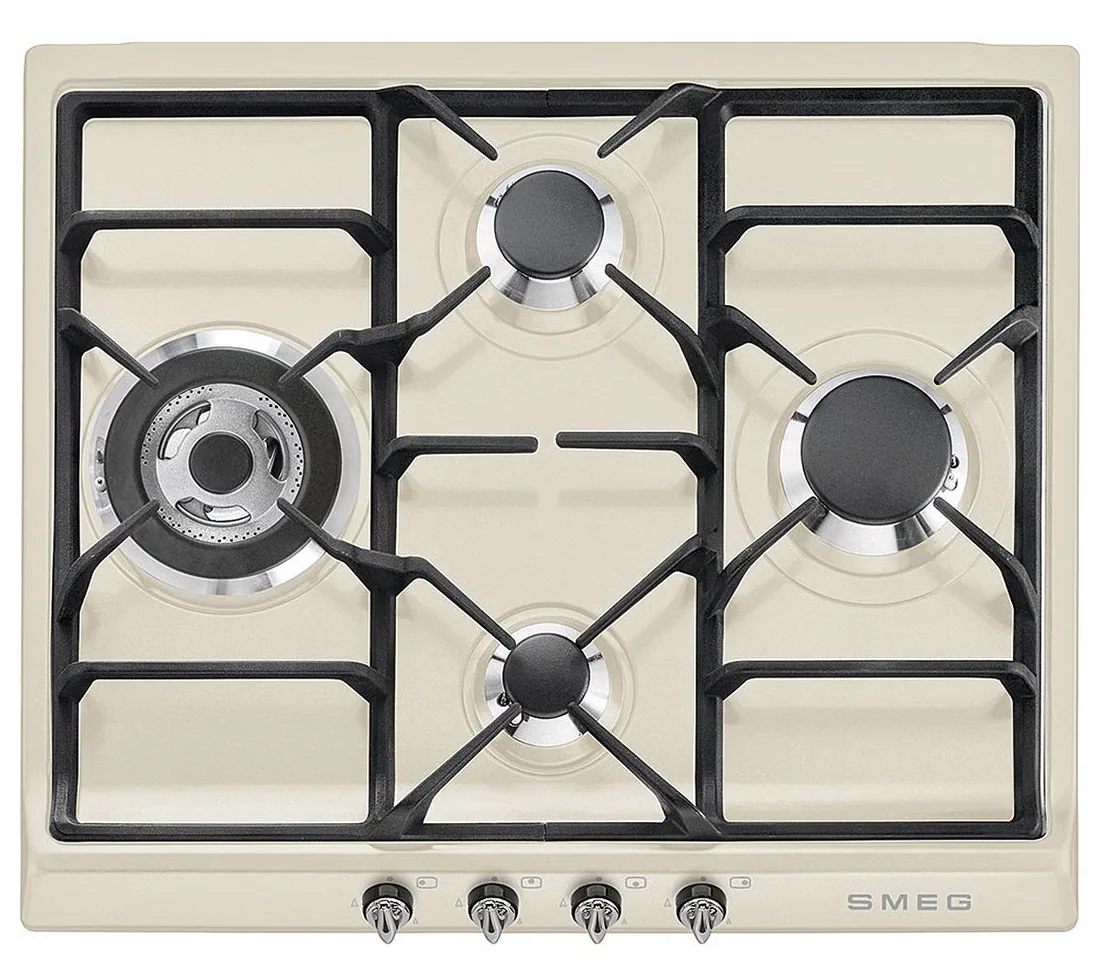
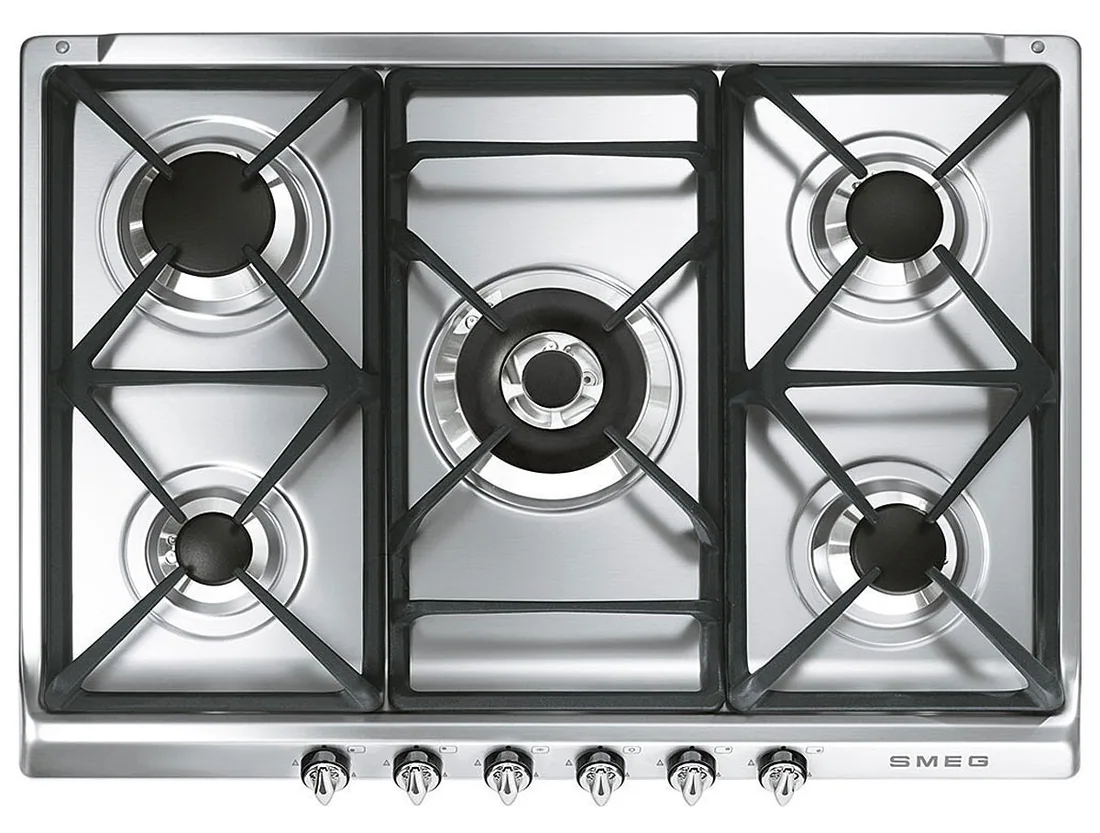
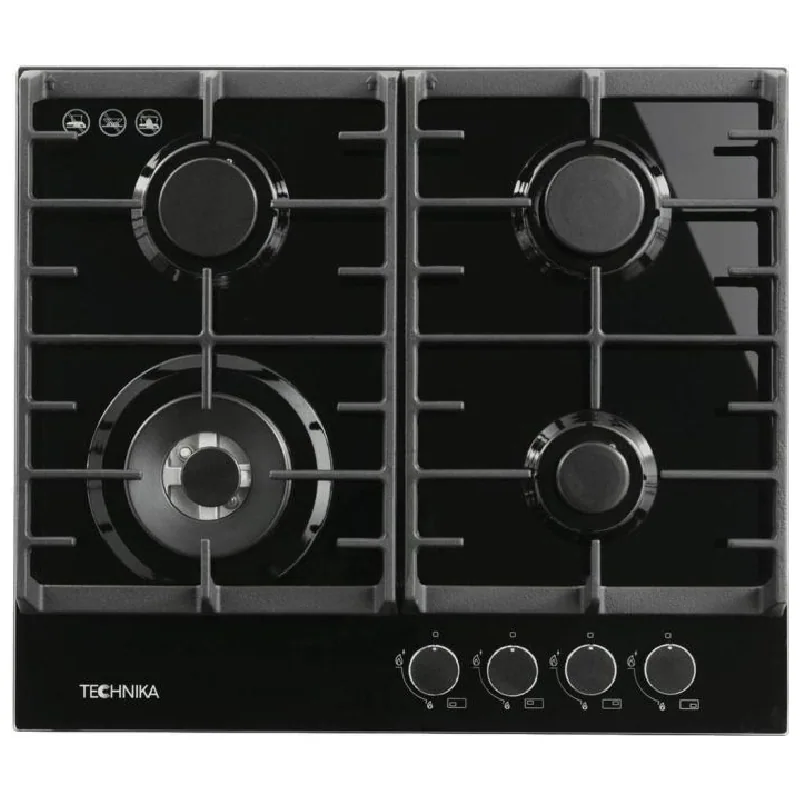
Draw the cooktop layout at roughly its actual size on paper and place your usual empty cookware on the plan. Include handles and the space needed to stir. Try a wide frypan beside a stockpot, then the combination you use for a family breakfast. This is a layout exercise, not a substitute for the manufacturer's cookware restrictions.
Look for conflicts with the control area and with neighbouring pans. A central wok burner may suit one cooking routine, while an offset burner may leave a more useful group of smaller burners elsewhere. The best arrangement depends on the pans you use together rather than on a universal preference for the centre or side.
Look for useful low heat as well as high heat
Manufacturers often highlight a wok burner, but a small burner can be equally valuable for sauces and modest quantities. Compare the available burner types and their positions. A powerful burner under an everyday small saucepan is not automatically useful, particularly if you need a gentle simmer while the larger pans occupy other positions.
Westinghouse and Fisher & Paykel specifications illustrate how cooktops combine wok, rapid, semi-rapid and auxiliary or simmer burners in different arrangements. Use those labels as a starting point, then read the model's operating guidance. Burner output alone does not tell you how comfortably several pans will fit or how a particular pan responds.
Consider the supports and controls
Check the trivet design and how securely your regular cookware sits on the intended burner. Some cooktops have flatter continuous supports, while others use separate pieces. A round-bottom wok needs the support approved for that appliance. Do not assume a loose ring or trivet from an older cooktop is suitable for a replacement.
Consider reaching for rear pans, reading the knob markings and removing support pieces for routine cleaning. Manufacturer pages may describe flame-failure devices, which shut off gas when a flame is extinguished; confirm the feature on the exact model. It supports safe operation but does not remove the need to supervise cooking.
Confirm the kitchen and the particular unit
Ask a licensed gasfitter to confirm the available gas type, model compatibility, installation requirements and ventilation arrangements. Electrical ignition may also require an appropriate electrical supply. Use the exact manuals for the cooktop and rangehood when planning surrounding cabinetry and clearances; do not transfer a measurement from a different appliance.
For Value House stock, check that the listing identifies the burner layout you want and ask which caps, trivets and approved wok support are included. The unit's condition and warranty information are listing-specific. Arrange pickup by appointment after the installation and cookware questions have been resolved.
Before you buy
- Sketch your busiest meal on the layout.
- Check access to controls and rear pans.
- Confirm included burner parts and supports.
- Have a licensed gasfitter assess the installation.
Sources & further reading
Prepared with AI assistance using the manufacturer and Australian guidance linked below. Check the exact model’s documentation when planning a purchase or installation.